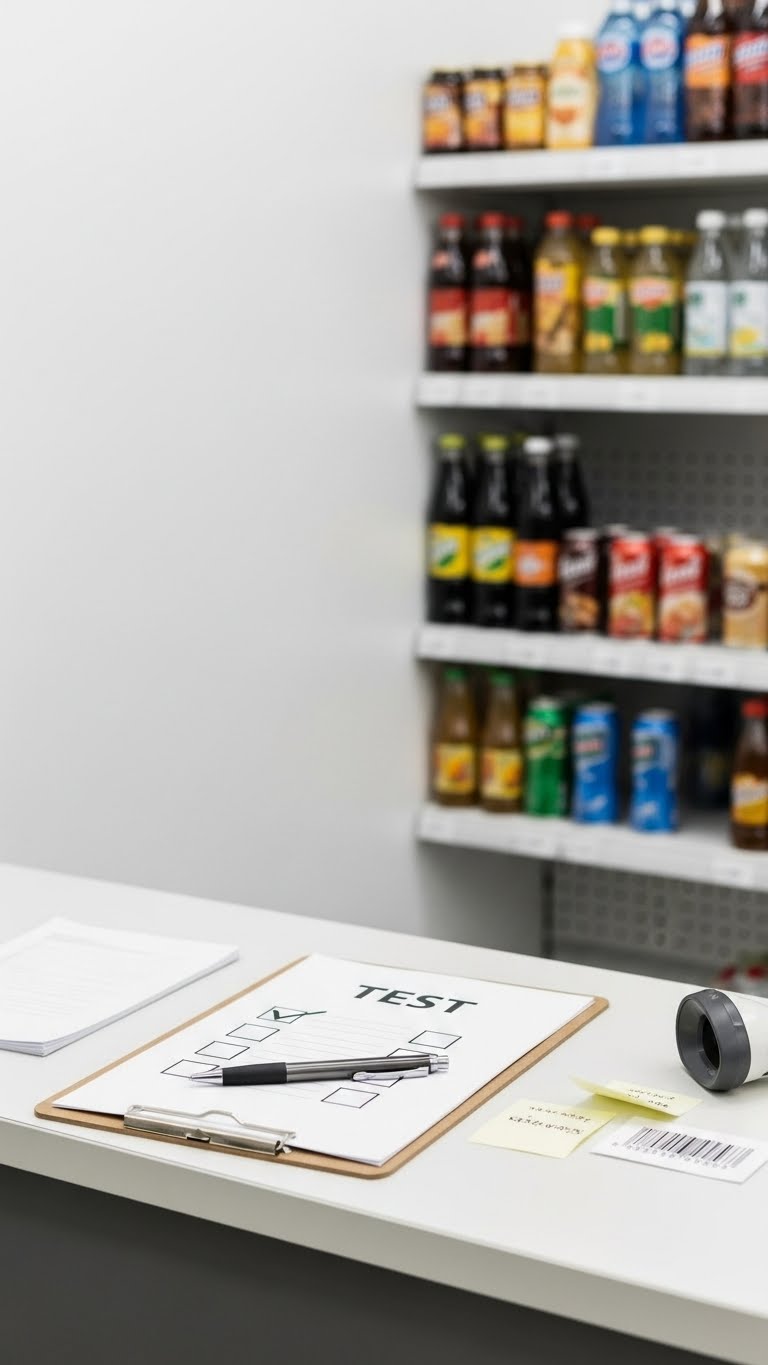
Trend products can boost sales fast—but they can also leave you with dead stock if you buy too deep. Here’s a simple 7-day test plan dépanneur owner-operators can use when customers start asking for a “viral” item (new snack, drink, ramen, etc.).
Step 1 — Day 1: Treat it like a test, not a commitment
Before ordering, answer two questions:
- Is it a one-time curiosity or a repeat-buy product?
- Does it fit convenience behavior? (impulse-friendly, small ticket, easy to explain)
If it’s hard to explain or expensive to try, it’s higher risk.
Step 2 — Days 1–2: Order shallow and fast
Start with low depth: typically 2–4 units per SKU (or one small case if you must).
Put it in one visible location with a simple tag: “Trending Now”.
Rule: One clean display beats three scattered placements.
Step 3 — Days 3–4: Measure demand with a simple signal
You don’t need fancy data. Track just:
- Units sold per day
- How many customers asked for it
- Whether customers bought it again (repeat within days)
If it sells at least 50% of stock in 3–4 days, it’s showing real movement.
Step 4 — Days 5–7: Decide with clear rules
- If it’s moving fast: reorder, but only 1.5× the first order (not 5×).
- If it’s slow: discount it early, bundle it, and replace it—don’t hold it.
Best Practices That Protect Profit
- Avoid mixing trend items into core shelves—keep them in a test zone.
- Use bundles to increase basket size: “Snack + Drink” works well.
- Rotate out anything that sits longer than 30–45 days.
Closing
Trends are profitable when you manage them like a process. A short test protects your cash flow, keeps your shelves fresh, and helps you learn what your neighborhood actually wants.
Laisser un commentaire