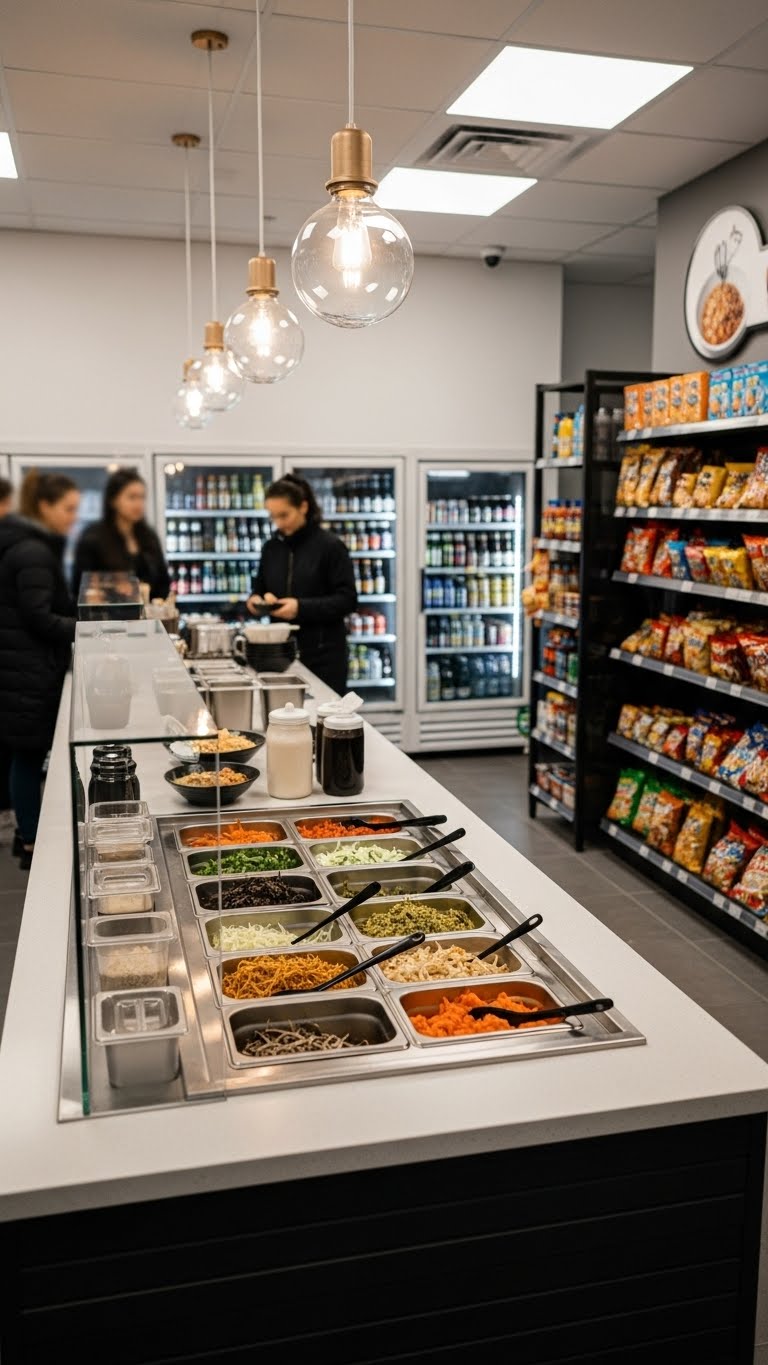
Over the past few years, Korean food has moved well beyond “specialty” shelves in Canada. What started with a few instant noodles and snacks has grown into a broader shift in how people shop for quick meals, bold flavours, and “try-it-because-I-saw-it-online” products. For Québec dépanneurs, this trend matters—not because every store needs to become a Korean convenience store, but because customer expectations are changing: more novelty, more ready-to-eat options, and more experience-driven purchasing.
Industry observers are already describing Korean cuisine as increasingly mainstream in Canada, with items like gochujang, kimchi, and bulgogi becoming familiar staples for many shoppers.
And in Québec, you can see signs of this shift in both products and store concepts.
From “Products” to “Experience”: The K-Convenience Effect
Korean convenience stores are famous for two things:
- Quick, customizable food
- Constant novelty (limited editions, viral snacks, curated shelves)
This “experience” model is now showing up in Canadian cities in different forms. In Montréal, for example, Le Fullsun has been described as a dépanneur/grocery-style concept that feels similar to East Asian convenience culture—where customers can choose an instant ramen pack, add toppings, and eat it in-store.
Even if most Québec dépanneurs won’t install ramen stations, the bigger takeaway is this:
Customers are increasingly willing to visit a convenience location for a mini meal + a mini experience, not only for a basic transaction.
Korean Products Are Already Becoming “Normal” in Québec
This isn’t only about trendy stores. It’s also about everyday availability.
A strong signal is when products start appearing through mainstream Québec retail channels. For example, Aliments du Québec lists a Québec-made kimchi product and notes availability through multiple major retailers and health grocery networks (including chains and banners such as IGA and Metro, among others listed on the product page).
At the same time, Montréal’s Korean grocery ecosystem continues to grow and serve both community shoppers and curious newcomers—Marché Korea, for instance, is widely referenced locally as a long-running Korean market with familiar staples like gochujang and instant noodles.
Put simply:
- Korean flavours are no longer “only for a niche audience.”
- Korean pantry items are becoming routine purchases.
- Korean instant noodles and snacks are often treated as impulse + repeat-buy items.
Why This Trend Matters for Québec Dépanneurs
1) Higher-margin, lower-footprint categories
Korean snacks, noodles, and beverages are often small, display-friendly, and impulse-driven—the perfect combination for convenience retail.
2) “Quick meal” is a convenience battleground
When customers can build a satisfying quick meal at a dépanneur—whether that’s ramen, a ready-to-eat item, or a simple meal combo—it increases basket size and repeat visits. Montréal concepts like Le Fullsun show how powerful the “meal build” idea can be.
3) Social media creates demand spikes
A product can go from unknown to “must try” overnight. This rewards stores that can merchandise fast, reorder fast, and rotate selections.
What to Stock First: A Practical Starter Set for Depanneurs
If you want to test the trend without overcommitting, start with a small “K-Corner” and measure weekly sales.
Category A — Instant noodles (core traffic driver)
- 6–10 SKUs total
- Include 1–2 “spicy challenge” SKUs + 1–2 mild/comfort SKUs
Category B — Snacks (high impulse)
- Chips, crackers, seaweed snacks, sweet biscuits
- Focus on “shareable” packaging and recognizable flavours
Category C — Drinks (repeat buys)
- Korean-style bottled drinks and popular flavours
- A small cooler-facing block helps visibility
Category D — Sauces (small but sticky loyalty)
- Gochujang-style products and Korean sauces are increasingly mainstream in Canada, according to industry reporting. (In dépanneurs, keep this category compact—think 3–6 SKUs max.)
Merchandising That Works (Even in Small Stores)
You don’t need a big renovation. The strongest results usually come from:
- One clearly branded shelf: “K-Snacks / Korean Picks / Trending Now”
- Simple signage: “Top 5 Bestsellers” + “New This Week”
- Bundle offers: “Ramen + Drink” or “Snack + Drink”
- Rotation discipline: switch 2–3 SKUs per month to keep novelty
This is the operational reality of convenience:
a small, well-managed display often outperforms a big, messy one.
Operational Notes (Keep It Clean and Low-Risk)
If you decide to do anything beyond packaged resale (ex: hot-water self-serve, toppings, in-store prep), you’ll want clear internal rules for:
- hygiene and cleaning schedule
- product handling and temperature control
- staff responsibilities (who checks what, and when)
Montréal examples highlight the appeal of in-store ramen preparation—but the operational bar rises quickly once you introduce any preparation element.
Closing: A Trend to Adapt, Not Copy
K-convenience isn’t a “replacement” for Québec dépanneurs. It’s a signal that convenience shoppers are looking for:
- more novelty
- more quick-meal creativity
- more curated experiences
The opportunity is real—but the best results will come from adapting the trend to your store size, your neighbourhood, and your operational capacity.
ADCAQ will continue monitoring retail trends that impact dépanneur owner-operators across Québec. If you’re a member and you want to share what customers are requesting (top Korean products, best sellers, supply issues, or margins), we invite you to contact us.
Leave a Reply